
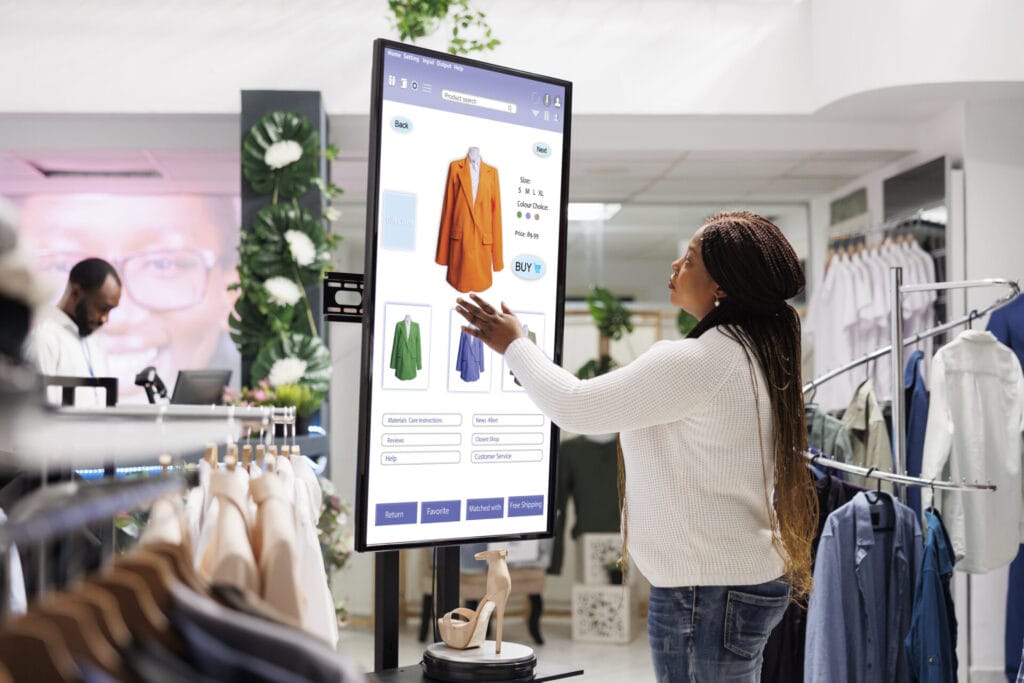
You are already doing the hard part. You have a product, a store — physical, digital, or both — and customers who need what you sell. The gap between where you are and where you want to be is almost always the same thing: a retail marketing strategy that actually works. Not in theory. Not on a whiteboard. But in practice, with real customers, on real channels, producing measurable results.
That gap is what we close at Evershare.
Retail marketing is the discipline of connecting your products with the people who want them — at the right moment, in the right channel, with the right message — and then turning that initial connection into a relationship that generates repeated revenue. It sounds simple. It is not. The retail landscape in 2025 is more fragmented, more competitive, and more consumer-driven than at any previous point in history, and the strategies that worked five years ago are delivering diminishing returns across almost every sector.
This guide covers what retail marketing actually is, why it matters more than ever, and — most importantly — what a smart, integrated strategy looks like for brands competing in today’s market.
What Is Retail Marketing?
Retail marketing encompasses every activity a business undertakes to promote its products or services directly to end consumers and drive them to purchase. It operates across a spectrum of channels — physical stores, e-commerce platforms, social media, search engines, email, paid advertising, events, and more — and its goal is consistent regardless of channel: make the right people aware of your products, give them reasons to choose you over competitors, and create the conditions for repeated purchase and brand loyalty.
What distinguishes retail marketing from other forms of marketing is its direct relationship with consumer behaviour. You are not marketing to procurement teams or corporate buyers — you are marketing to individual people whose purchase decisions are shaped by emotion, convenience, price sensitivity, social influence, peer recommendations, and an almost infinite range of competing stimuli. Every strategy in a retail marketing toolkit must be designed with the complexity and unpredictability of human consumer behaviour at its centre.
The retail sector in the UK and globally is enormous and still growing. Global e-commerce sales were forecast to reach $6.09 trillion by the end of 2024, marking an 8.4% annual increase, setting the stage for an even greater expansion to $6.56 trillion in 2025. At the same time, physical retail is not dying — it is evolving. The most successful retail brands in 2025 are not purely online or purely physical: they are seamlessly both.
Why Retail Marketing Has Never Been More Important — or More Challenging
The honest reality of retail marketing in 2025 is that the consumer has never been more empowered, more distracted, or more demanding. Three forces are reshaping the landscape simultaneously, and any retail marketing strategy that does not account for all three will underperform.
The Fragmentation of Consumer Attention
Your potential customers are not in one place. They are on Instagram discovering products through influencer content, on TikTok watching brand videos, on Google comparing prices, on Amazon checking reviews, in your physical store touching and feeling the product, and on your website deciding whether to complete the purchase. Each of these touchpoints is a moment of influence — and a moment of potential loss. Many shopping journeys span multiple channels rather than remaining in one place. Consumers research on a phone, compare prices on a laptop, and complete the purchase wherever it’s most convenient.
The retail brands that win in this environment are those that create a coherent, consistent presence across all of these touchpoints — not just the ones that are cheapest or most familiar.
The Rise of the Values-Driven Consumer
The modern consumer is not just buying a product. They are buying an alignment with a brand’s identity, values, and commitments. Customers are becoming increasingly discerning about brand authenticity and commitment to sustainability, and audiences are becoming more critical of eco-conscious claims, challenging brands and influencers to make meaningful change.
This is not a passing trend. It is a structural shift in what retail marketing must communicate, and it raises the bar for every brand in every category. Generic messaging that focuses only on product features and price is no longer sufficient to differentiate.
The Expectation of Personalisation at Scale
Consumers expect to be treated as individuals, not demographics. 61% of global marketing executives believe generative AI will enhance customer personalisation and engagement efforts. The technology to deliver genuine personalisation at scale now exists and is rapidly becoming table stakes. Retailers who are still sending the same email to their entire database and showing the same ads to every visitor are falling behind competitors who are using first-party data and AI to serve genuinely relevant content, offers, and recommendations.
The Core Pillars of Effective Retail Marketing
1. Brand Identity and Positioning
Every retail marketing strategy starts here. Before you can market effectively, you need to be able to articulate with precision what your brand stands for, who it is for, and why a consumer should choose you over every available alternative. This is not a mission statement — it is a sharp, honest assessment of your competitive position.
Take Gymshark as an example. When Gymshark launched, the fitness wear market was dominated by Nike and Adidas. Rather than trying to compete with them directly on brand heritage and broadcast advertising budgets, Gymshark positioned itself as an authentic community brand for serious gym-goers — a positioning expressed through the people they partnered with, the content they created, and the experience they offered. That clarity of positioning made every subsequent marketing decision easier and more effective.
Your brand positioning is the foundation upon which all channel strategy is built. Without it, you are spending money on tactics without strategy.
2. Omnichannel Integration
The concept of omnichannel retail marketing has been discussed for over a decade. In 2025, it is not a strategic innovation — it is a baseline requirement. Customers who shop using multiple channels buy 1.7 times more than those who only use one channel, and they also spend more money. The revenue implication of that statistic alone should make omnichannel integration a board-level priority for any retail business.
Omnichannel retail marketing means more than simply being present on multiple platforms. It means that the experience a customer has on your website, in your physical store, through your email communications, and on your social channels is coherent, consistent, and connected. Their purchase history informs their email recommendations. Their in-store interactions are reflected in their online account. Their loyalty points are visible and redeemable across every channel. The inventory they see online is accurate to what is available in the store they are nearest to.
This level of integration requires investment in infrastructure — single customer view data architecture, connected CRM systems, unified commerce platforms — but the commercial return is clear and well-evidenced.
Read also- what is omni channel marketing
3. Social Commerce and Influencer Marketing
Social commerce — native shopping experiences on a social media platform — offers shoppers an even more seamless way to shop online, and US social commerce sales are expected to surpass $137 billion by 2028. For UK retail brands, the trajectory is similar.
Social media platforms — Instagram, TikTok, Pinterest, YouTube — are no longer purely awareness channels. They are complete commerce environments where discovery, consideration, and purchase can all happen without the customer ever leaving the app. 71% of TikTok shoppers purchase from feed finds. That is a remarkable conversion signal that most retail marketing strategies are still not fully leveraging.
Influencer marketing is the most effective tool for driving both discovery and social commerce conversion, but the influencer landscape has matured significantly. The era of paying celebrity accounts enormous fees for generic posts is giving way to a more sophisticated model focused on micro and nano-influencers with highly engaged, specific audiences. 90% of Gen Z beauty shoppers have bought a beauty product after seeing an influencer recommend it.
The Footasylum example from recent years illustrates this evolution brilliantly. Rather than running conventional influencer campaigns, the brand created Locked In — a Big Brother-style web series featuring UK influencers on YouTube. The fourth season alone generated over 37 million views and more than two billion impressions, with products integrated naturally into the content rather than advertised explicitly. That is retail marketing that earns attention rather than simply buying it.
4. Email Marketing: Still the Highest-Return Channel
Amid all the excitement around social commerce and AI personalisation, email marketing remains one of the most effective channels in retail. In 2024, 63% of marketers say social media gives them the best return on investment, followed by email marketing at 43%. But when measured by actual revenue attribution — not just reported ROI — email consistently outperforms almost every other digital channel for direct-to-consumer retail.
The key is that email marketing in 2025 is not batch-and-blast. It is behavioural, triggered, and personalised. Abandoned cart sequences. Post-purchase onboarding journeys. Win-back campaigns for lapsed customers. Birthday and anniversary triggers. Browse abandonment reminders. Each of these sequences operates automatically, converts measurably, and costs a fraction of paid acquisition.
If your retail marketing strategy is not making full use of behavioural email automation, this is almost certainly the highest-return improvement available to you today.
5. Search: Organic and Paid
Search engine optimisation (SEO) and pay-per-click advertising (PPC) remain foundational retail marketing channels, driving purchase-intent traffic at scale. Retail-focused search is complex — product pages, category pages, and brand pages all require different strategies — but the commercial rewards of strong search presence are substantial and durable.
The emerging dimension of search in retail marketing is the rise of AI-generated answers in search results, which is changing how consumers discover and compare products. Traffic to retail sites from generative AI tools during the 2025 holiday season was up 693.4% compared with the prior year. Optimising for AI-powered search — ensuring your product and brand appear in AI overviews, ChatGPT responses, and similar surfaces — is rapidly becoming as important as traditional Google ranking.
6. Loyalty Programmes: Retention as a Revenue Strategy
Acquiring a new customer costs significantly more than retaining an existing one. Retail marketing strategies that focus exclusively on acquisition and neglect retention are leaving substantial revenue unrealised. The subscription, membership, and loyalty sector is booming, with the industry valued at an estimated $3 trillion in 2024, up from $2 trillion in 2023.
Effective loyalty programmes in retail go well beyond simple points accumulation. The most sophisticated programmes create genuine behavioural incentives — exclusive access, early product launches, personalised rewards, tiered benefits — that make high-value customers feel genuinely recognised and valued rather than simply enrolled. When loyalty is designed well, it creates a competitive moat that price-matching alone cannot breach.
7. In-Store Experience: Physical Retail Reimagined
For brands with physical retail presence, the store itself is a marketing channel. In an era where any product can be purchased online with two clicks, the role of the physical store has shifted from transaction completion to experience creation. Brick-and-mortar stores have the opportunity to provide value through relationship marketing by strengthening customers’ relationship to the brand. Immersive, Instagrammable experiences — “retailtainment” — can bring the brand alive.
The most forward-thinking physical retailers are designing stores as destinations, not just distribution points. They host events, workshops, and community gatherings. They create spaces that consumers want to photograph and share. They train staff to be brand ambassadors rather than transaction processors. The product is almost secondary to the experience that wraps around it.
Data and Measurement: The Engine Beneath Every Strategy
None of the above channels and tactics deliver maximum return without robust data collection, analysis, and iteration. Retail marketing at scale is a data discipline as much as a creative one.
The shift from third-party cookies to first-party data strategies is now complete in practice, even if not yet in regulation. Building your own first-party data estate — through loyalty programmes, email collection, account creation, in-store interactions — is the foundation of sustainable retail marketing performance. Every customer interaction is an opportunity to enrich your understanding of who that customer is, what they value, and when they are most likely to respond to an offer.
Half of retail executives are prioritising AI-driven personalised product recommendations, as retailers gather larger volumes and potentially more sensitive types of data. The brands that are doing this well — using data to serve genuinely helpful, relevant experiences rather than simply to retarget aggressively — are building trust as well as revenue.
For more info check: Deloitte’s Retail Industry Outlook — one of the most authoritative annual assessments of retail trends, consumer behaviour shifts, and strategic priorities for retail brands globally.
Where Evershare Fits In
The challenge most retail brands face is not a lack of marketing channels — it is a lack of strategic coherence across them. Each channel operates in isolation, with separate agencies, separate KPIs, and separate creative briefs that do not add up to a unified customer experience.
At Evershare, we build retail marketing strategies that work as integrated systems. We define your brand positioning, identify the channels where your target consumers are most reachable, create the content and campaigns that move them through the purchase journey, and measure performance with the rigour that turns marketing from a cost centre into a measurable growth engine.
Retail marketing is not a set of tactics. It is a strategy. And strategy, done well, is the most powerful commercial lever available to any brand.
For more info check: HubSpot’s State of Marketing Report — a comprehensive annual resource tracking marketing channel performance, consumer behaviour, and ROI data across retail and e-commerce sectors.
Frequently Asked Questions
What is the difference between retail marketing and general marketing?
Retail marketing focuses specifically on promoting products or services directly to end consumers through channels that drive purchase decisions — whether in-store, online, or across social platforms. General marketing is a broader discipline that includes B2B marketing, brand marketing, and other forms of promotion not directly tied to consumer purchase conversion.
Which retail marketing channel delivers the best ROI?
It depends on your business, category, and customer base — but email marketing and SEO consistently deliver the highest measurable return relative to spend for most retail businesses. Social media and paid search excel at top-of-funnel awareness and intent capture respectively. An integrated strategy that uses each channel for its specific strength outperforms any single-channel approach.
How important is personalisation in retail marketing?
Increasingly essential. Research consistently shows that personalised experiences drive higher conversion rates, larger basket sizes, and stronger customer retention. With AI tools now making genuine personalisation accessible at scale, this is no longer a capability reserved for enterprise retailers — it is available to brands of all sizes and is rapidly becoming a baseline consumer expectation.