
Marketing is one of the most important functions within any organisation. It helps businesses identify customer needs, develop valuable products or services, and communicate their offerings to the right audience. However, successful marketing does not happen by chance. It requires a structured approach that guides businesses from research and planning to execution and evaluation.
This structured approach is known as the marketing process. It provides a framework that helps organisations understand their customers, develop strategies, and measure the effectiveness of their marketing efforts.
In today’s competitive marketplace, businesses must continuously adapt to changing customer preferences, technological advancements, and market conditions. A well-designed marketing process allows companies to remain organised, focused, and responsive to these changes.
This guide explains the key stages of the marketing process, the tools used to support it, and best practices for creating effective marketing strategies that drive long-term success.
Understanding the Marketing Process
What Is the Marketing Process?
The marketing process refers to the series of steps businesses follow to identify customer needs, create value, and deliver products or services that meet those needs.
It is not a single activity but a continuous cycle that involves planning, implementation, and evaluation. The marketing process ensures that marketing strategies are aligned with business objectives and customer expectations.
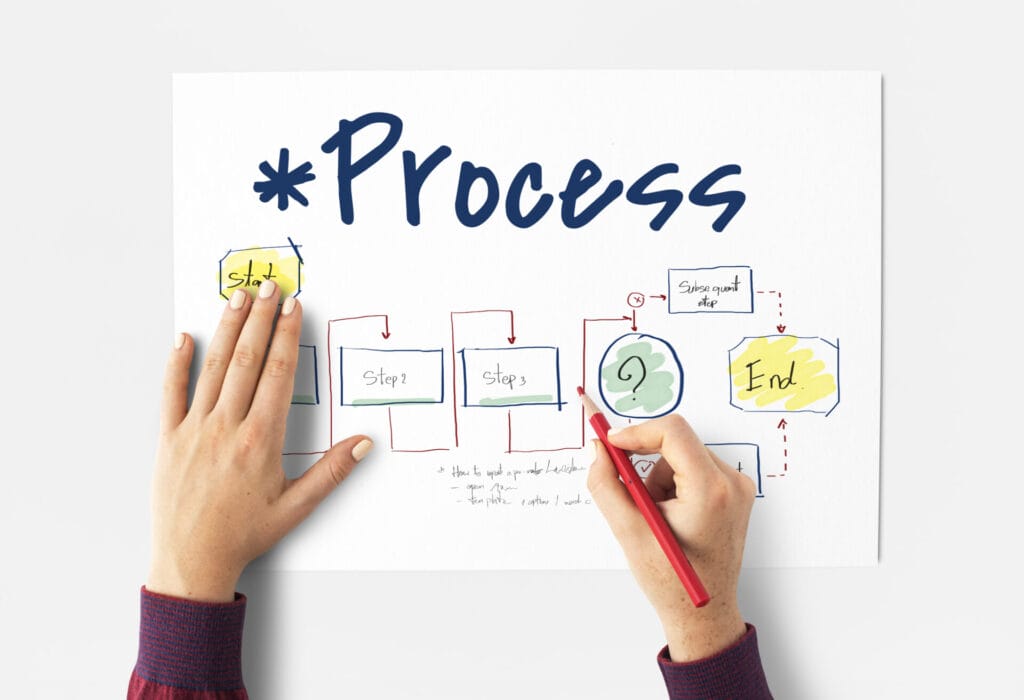
Most marketing frameworks include the following stages:
-
market research
-
strategy development
-
marketing planning
-
implementation
-
monitoring and evaluation
By following these stages, organisations can make informed decisions and create effective marketing campaigns.
Why the Marketing Process Is Important
A structured marketing process helps businesses avoid guesswork and focus on strategies that deliver measurable results.
Key benefits include:
-
improved understanding of customers
-
better alignment with business goals
-
efficient use of marketing resources
-
consistent brand messaging
Companies that follow a well-defined marketing process are more likely to achieve sustainable growth and maintain strong relationships with their customers.
Stage 1: Market Research
Understanding the Market Environment
The first stage of the marketing process involves analysing the market environment. Businesses must understand the external factors that influence customer behaviour and industry trends.
Important areas to analyse include:
-
economic conditions
-
industry competition
-
technological developments
-
regulatory factors
Understanding these factors helps businesses identify opportunities and potential challenges.
Analysing Customer Needs
Customer insights are essential for successful marketing. Businesses must understand who their customers are, what problems they face, and how they prefer to interact with brands.
Market research methods may include:
-
customer surveys
-
interviews
-
focus groups
-
online behaviour analysis
These insights provide valuable information that shapes marketing strategies.
For more insights into market research techniques, for more info check:
https://www.marketingweek.com
Stage 2: Developing a Marketing Strategy
Defining Target Audiences
Once businesses understand the market environment, they must identify their target audience. Target audiences represent the groups of customers most likely to benefit from a company’s products or services.
Audience segmentation may be based on:
-
demographics
-
geographic location
-
lifestyle preferences
-
purchasing behaviour
By defining specific audiences, businesses can tailor their messaging and marketing campaigns more effectively.
Creating a Value Proposition
A value proposition explains why customers should choose one brand over another. It highlights the unique benefits of a product or service and communicates the value it provides.
An effective value proposition should clearly explain:
-
the problem being solved
-
the benefits offered
-
what makes the solution different from competitors
A strong value proposition forms the foundation of a successful marketing process.
Stage 3: Marketing Planning
Setting Marketing Objectives
Marketing objectives provide direction and measurable goals for marketing activities. These objectives should align with broader business goals.
Examples of marketing objectives include:
-
increasing brand awareness
-
generating leads
-
improving customer retention
-
expanding into new markets
Clear objectives help teams evaluate the success of their marketing efforts.
Developing Marketing Tactics
After defining objectives, businesses must decide which marketing tactics will help achieve them.
Common marketing tactics include:
-
content marketing
-
search engine optimisation
-
social media marketing
-
email campaigns
-
paid advertising
Selecting the right mix of tactics is a key part of the marketing process.
Stage 4: Implementing Marketing Activities
Executing Campaigns
The implementation stage involves launching marketing campaigns and delivering messages to the target audience.
Marketing teams coordinate multiple activities such as:
-
publishing content
-
running advertising campaigns
-
managing social media accounts
-
organising events or webinars
Effective coordination ensures that marketing messages remain consistent across different channels.
Managing Marketing Channels
Modern businesses communicate with customers through a wide range of channels.
These may include:
-
websites
-
social media platforms
-
email newsletters
-
online advertising networks
Managing these channels effectively ensures that customers receive clear and consistent messages.
Read also- marketing channels explained
Stage 5: Monitoring and Evaluation
Measuring Performance
Evaluation is a critical stage of the marketing process. Businesses must measure the effectiveness of their marketing campaigns to determine whether they achieved their objectives.
Common marketing metrics include:
-
website traffic
-
conversion rates
-
lead generation
-
customer acquisition cost
These metrics provide insights into campaign performance and identify areas for improvement.
Continuous Improvement
Marketing strategies should evolve based on data and customer feedback.
Regular analysis allows businesses to refine their marketing activities and adapt to changing market conditions.
For more information about marketing performance measurement, for more info check:
https://www.cim.co.uk
Tools That Support the Marketing Process
Marketing Automation Platforms
Marketing automation tools help businesses manage campaigns and streamline repetitive tasks.
These platforms allow marketers to automate activities such as:
-
sending email campaigns
-
segmenting audiences
-
tracking user behaviour
Automation helps ensure that the marketing process operates efficiently.
Customer Relationship Management Systems
Customer Relationship Management systems store information about customer interactions and purchasing behaviour.
These systems help businesses track relationships with prospects and customers throughout the marketing and sales cycle.
Data Analytics Tools
Analytics tools provide insights into campaign performance and customer behaviour.
By analysing data, businesses can identify trends, measure success, and improve their marketing strategies.
Challenges in the Marketing Process
Adapting to Changing Market Conditions
Markets are constantly evolving due to technological advancements, economic changes, and shifting customer preferences. Businesses must regularly update their marketing strategies to remain competitive.
Managing Multiple Marketing Channels
Modern marketing involves numerous communication channels. Coordinating messaging across these platforms can be complex.
Businesses must ensure that branding and messaging remain consistent across all channels.
Demonstrating Marketing Value
Some organisations struggle to demonstrate the financial impact of marketing activities. Measuring return on investment is essential for proving the value of marketing initiatives.
Best Practices for an Effective Marketing Process
Focus on Customer Needs
Successful marketing always begins with understanding customer needs and preferences. Businesses should regularly collect feedback and analyse customer behaviour.
Align Marketing With Business Goals
Marketing strategies should support the broader objectives of the organisation.
Aligning marketing activities with business goals ensures that marketing efforts contribute to overall success.
Use Data to Guide Decisions
Data-driven decision-making helps businesses identify the most effective marketing strategies and optimise campaigns for better results.
The Future of the Marketing Process
Technological advancements are transforming how businesses approach marketing. Artificial intelligence, marketing automation, and predictive analytics are enabling organisations to personalise marketing messages and anticipate customer needs.
Companies that embrace these technologies will be able to refine their marketing process and deliver more relevant and engaging customer experiences.
As competition continues to grow, businesses must remain flexible and continuously improve their marketing strategies.
Conclusion
The marketing process provides a structured framework that helps businesses understand their customers, develop effective strategies, and measure the success of their marketing activities.
By following the stages of research, strategy development, planning, implementation, and evaluation, organisations can create marketing campaigns that drive meaningful results.
Businesses that invest in a well-defined marketing process will be better equipped to adapt to market changes, build strong customer relationships, and achieve sustainable growth.
FAQs
What is the marketing process?
The marketing process is a series of steps businesses follow to identify customer needs, develop strategies, implement marketing campaigns, and measure results.
Why is the marketing process important?
It helps businesses organise marketing activities, understand their audience, and achieve measurable marketing objectives.
What are the stages of the marketing process?
The main stages include market research, strategy development, planning, implementation, and evaluation.